
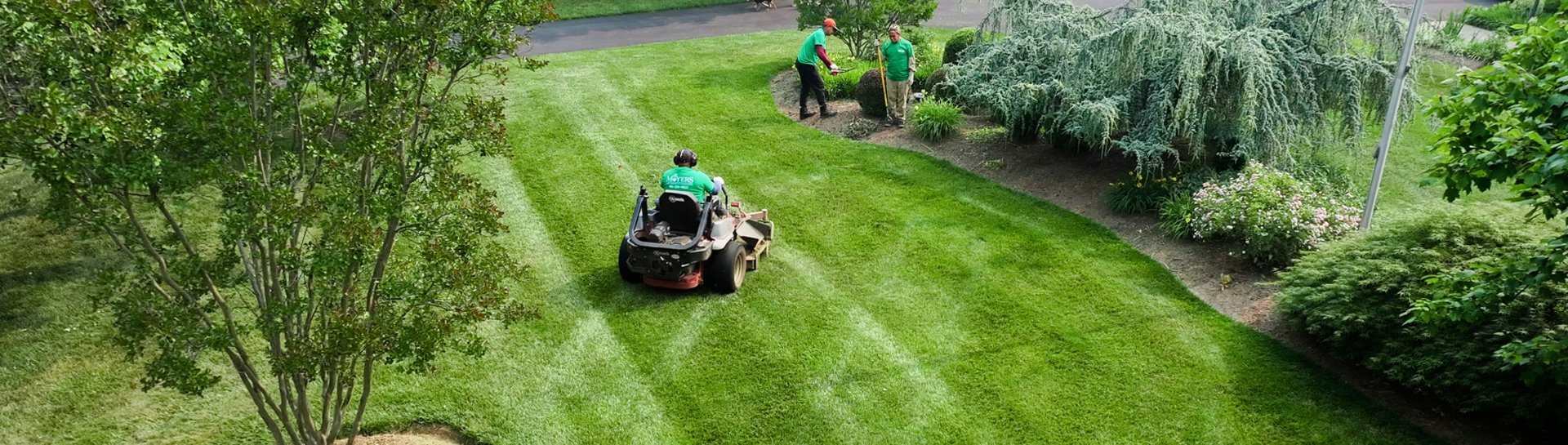
Late summer is one of the most stressful times of year for a lawn. If your grass has been looking tired, patchy, or just plain worn out these past few weeks, you are not alone. Lawn care gets tricky in August because the heat, humidity, and heavy use from a full summer season all pile up at once. The good news is that a few smart steps right now can turn things around before fall arrives, and fall is actually the best window of the year to set your lawn up for long-term success.
What Is Actually Causing Your Lawn to Struggle
Understanding the problem makes the fix a lot easier. By August, cool-season grasses like tall fescue and Kentucky bluegrass (which are the most common in our area, from Damascus and Burtonsville down through Wheaton and Takoma Park) have been under heat stress for weeks. They naturally slow down or go semi-dormant when temperatures stay high. That brownish, thin look you are seeing is often the lawn protecting itself, not dying.
At the same time, compacted soil builds up over the summer from foot traffic, lawn furniture, and equipment. Compaction keeps water and nutrients from reaching the roots. Combine that with thatch buildup and possibly some opportunistic weeds or fungal patches encouraged by our humid Maryland summers, and you end up with a lawn that looks like it gave up.
What You Can Do Right Now
Adjust your mowing height
Raise your mower blade. Cutting grass too short in August stresses already-struggling turf. A height of three to four inches helps shade the soil, keeps moisture in, and gives the grass a fighting chance. Never take off more than one-third of the blade at a time. This one change alone makes a noticeable difference.
Water deeply but less often
Frequent shallow watering trains grass roots to stay near the surface, which makes them more vulnerable to heat. Instead, water deeply two to three times a week, ideally early in the morning before the heat sets in. An inch of water per week is a good general target for our Montgomery County climate. If you are in Aspen Hill or anywhere else in the county dealing with clay-heavy soil, deep watering is especially important because clay drains slowly and compacts easily.
Hold off on heavy fertilizing
It is tempting to throw down fertilizer hoping it will green things up, but a heavy nitrogen application in the peak of summer heat can actually burn stressed grass. Wait until early September when temperatures start to ease. That fall fertilizer application is one of the most valuable things you can do for cool-season lawns, and the timing matters.
Watch for fungal issues
Hot, humid August nights in our area are prime conditions for lawn fungus, including brown patch and dollar spot. If you are seeing irregular brown or tan circles in your grass, that is likely a fungal problem rather than drought stress. The treatment is different, so identification matters. Our team has dealt with just about every fungal issue you can find in Montgomery County and NW DC, and we can tell you pretty quickly what you are looking at.
Plan for aeration and overseeding
Core aeration pulls small plugs from the soil, which relieves compaction and lets air, water, and nutrients get where they need to go. Following that up with overseeding fills in thin spots with fresh grass. The sweet spot for this in our region is mid-August through September, when soil is still warm enough to help new seed germinate but the brutal heat is starting to back off. If there is one thing we consistently tell homeowners from Wheaton to Burtonsville to Takoma Park, it is do not skip the fall aeration and overseeding. It pays off come spring.
When to Call in Some Help
Some lawn problems are straightforward to address on your own. Others, like persistent thin turf, drainage issues causing waterlogged spots, or recurring disease pressure, really benefit from a professional eye. We have been doing this work since 1981, and our team of 30 lawn and yard experts works with properties all across Montgomery County and NW DC, including Damascus, Aspen Hill, and surrounding areas. We are licensed, insured, and have spent over 40 years learning exactly how Maryland lawns behave through every season.
If your lawn is struggling and you are not sure where to start, or if you want help with aeration, overseeding, or a full late-summer assessment, please give us a call or drop us an email. We are happy to take a look and talk through what makes sense for your specific yard.